
Need to remove old floor paint, strip worn coatings, or prepare concrete for a new industrial flooring system? Compact floor shot blasting equipment provides an efficient mechanical solution for surface preparation, helping contractors and industrial facility managers achieve a clean, textured surface before recoating or renovation.
Compared with labor-intensive manual removal, a properly selected compact floor shot blasting machine can improve working efficiency, reduce abrasive waste through media recovery, and create a more consistent concrete surface profile.
For flooring contractors, maintenance companies, construction equipment distributors, and industrial plant operators, the right machine can help reduce preparation time while improving the reliability of subsequent coating applications.
Looking for a compact floor shot blasting machine for your next project? Evaluate the required working width, surface condition, production rate, dust collection capacity, and target surface profile before selecting your equipment.
1. What Is Compact Floor Shot Blasting Equipment?
Compact floor shot blasting equipment is a mechanical surface preparation system designed to propel abrasive media against concrete or other suitable substrates using a high-speed blast wheel.
During operation, the machine accelerates abrasive media toward the floor to remove surface contaminants and create a controlled texture. A recovery and separation system collects reusable abrasive, while a connected dust collector captures airborne dust generated during the process.
Depending on the machine configuration and application, compact floor shot blasting equipment can be used for:
- Removing compatible floor paints and worn coatings.
- Stripping suitable thin coating systems.
- Preparing concrete floors for epoxy and polyurethane coatings.
- Removing weak surface laitance and certain surface contaminants.
- Creating a mechanical profile for industrial floor renovation.
- Preparing warehouse, workshop, and factory floors for recoating.
Important: Shot blasting is a mechanical surface preparation method, not a universal coating remover. Thick, flexible, highly elastic, or poorly bonded coatings may require preliminary removal or a different preparation method. Trial blasting is recommended when the coating composition or concrete condition is unknown.
2. Why Choose Compact Floor Shot Blasting Equipment?
2.1 Efficient Paint and Coating Removal
A properly configured shot blasting machine can remove suitable coatings and contaminants in a controlled, repeatable process.
Its performance depends on the coating thickness, coating adhesion, abrasive type, blast-wheel configuration, machine speed, and concrete hardness.
For renovation contractors handling large floor areas, mechanized preparation can reduce dependence on manual scraping and improve workflow consistency.
2.2 Uniform Concrete Surface Preparation
A consistent surface profile is essential for many industrial flooring systems.
Compact floor shot blasting equipment mechanically textures concrete, helping remove weak surface layers and expose a suitable substrate for subsequent coating or overlay installation.
The target profile should always be determined by the coating manufacturer’s requirements and the project specification rather than by machine settings alone.
2.3 Compact Design for Practical Jobsite Operation
A compact machine can be useful in workshops, small industrial facilities, maintenance areas, and renovation projects where access or storage space is limited.
Depending on its actual dimensions and configuration, it may be easier to transport, position, and maneuver than larger production machines.
For contractors working across multiple sites, equipment mobility and setup time can be just as important as nominal blasting capacity.
2.4 Abrasive Recovery and Lower Media Waste
Many floor shot blasting machines use a closed-loop abrasive recovery system.
After impact, reusable abrasive is collected and returned to the blasting process, while dust and fine debris are separated through the recovery system.
This can reduce abrasive consumption and help maintain stable blasting performance. Actual operating costs depend on abrasive wear, contamination, surface conditions, and maintenance practices.
2.5 Improved Dust Management
When properly sealed and connected to a suitably sized industrial dust collector, the system can capture a substantial portion of dust generated during blasting.
Effective dust control improves jobsite cleanliness and supports safer operation. Collector selection should consider airflow, filtration performance, filter maintenance, and the hazards associated with the existing coating and substrate.
Dust extraction does not eliminate the need for a site-specific exposure assessment and appropriate worker protection.
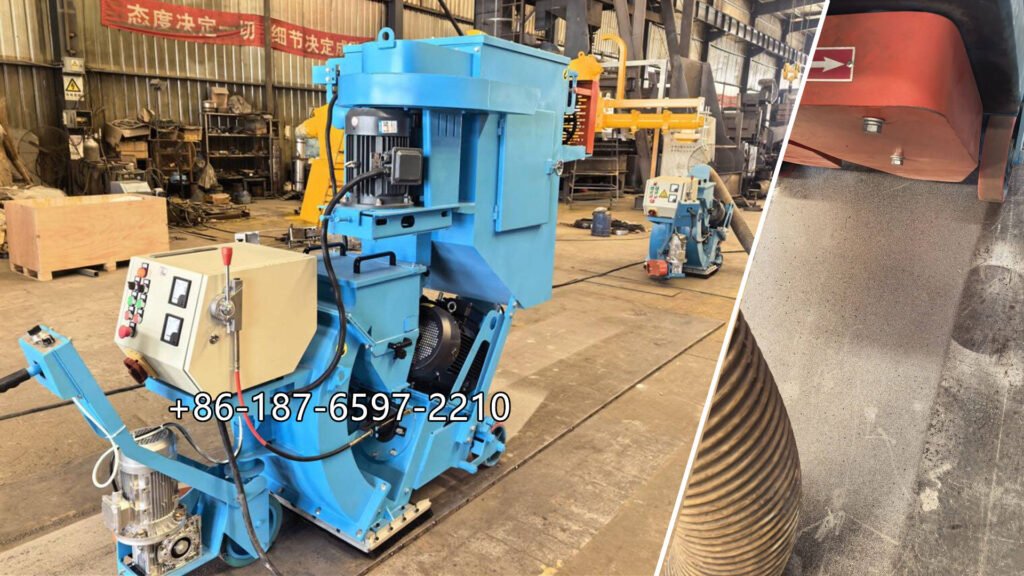
3. Technical Parameters of Compact Floor Shot Blasting Equipment
The following table provides illustrative preliminary specification ranges for equipment selection, not verified specifications for a particular manufacturer’s model. Actual values must be confirmed against the selected machine’s datasheet.
| Technical Parameter | Illustrative Selection Range |
|---|---|
| Equipment type | Compact walk-behind floor shot blasting machine |
| Application | Concrete floor preparation, suitable paint removal, coating stripping |
| Working width | Approximately 200–300 mm |
| Blasting capacity | Approximately 20–80 m²/h, depending on conditions |
| Drive configuration | Electric drive; optional configurations depend on model |
| Blast-wheel motor power | Approximately 5.5–11 kW |
| Power supply | Commonly 380–415 V, 50 Hz, three-phase, subject to market |
| Abrasive type | Compatible steel shot or other manufacturer-approved media |
| Abrasive recovery | Integrated or machine-specific recovery system |
| Dust collection | Compatible external industrial dust collector |
| Surface profile | Project-dependent; verify against the specified coating system |
| Operation | Walk-behind or other model-specific configuration |
| Customization | Working width, power supply, dust collection, and accessories |
Parameter selection note: The ranges above are planning examples only. They are not a representation of tested output, guaranteed productivity, or certified performance. Do not publish them as confirmed product specifications unless they match your actual equipment documentation.
Before requesting a quotation, confirm the working width, rated motor power, voltage and frequency, actual machine dimensions, abrasive consumption, compatible dust collector, and measured production capacity.
4. How Does a Compact Floor Shot Blasting Machine Work?
A typical floor shot blasting process consists of five stages.
Step 1: Inspect the Existing Floor
Identify the substrate, coating type, coating thickness, surface contamination, and any cracks, delamination, or structural defects.
Check whether the existing paint may contain lead or other hazardous substances before disturbing it.
Step 2: Select the Blasting Configuration
Choose a suitable working width, abrasive specification, blast-wheel configuration, and travel speed based on the coating and required surface profile.
Perform a test section to confirm coating removal effectiveness and substrate condition.
Step 3: Blast the Floor
The blast wheel propels abrasive media toward the floor. Controlled impact removes suitable coatings and weak surface material while producing the required texture.
Maintain a consistent travel speed and overlap between passes to minimize uneven preparation.
Step 4: Recover Abrasive and Collect Dust
The recovery system separates reusable abrasive from dust and debris. The dust collector captures airborne particles generated during operation.
Inspect seals, recovery components, hoses, and filters regularly to maintain system performance.
Step 5: Inspect the Prepared Surface
Check the floor for remaining coating, loose material, contamination, and uniformity of the surface profile.
Confirm that the surface meets the coating manufacturer’s requirements for profile, cleanliness, moisture, and other relevant acceptance criteria before applying the new flooring system.
5. Applications of Compact Floor Shot Blasting Equipment
Industrial Workshop Floor Renovation
Workshop floors may accumulate worn coatings, tire marks, and surface contamination during years of operation. Suitable shot blasting equipment can prepare the concrete for a new protective flooring system.
Warehouse and Logistics Facility Floors
Warehouse renovation often requires an efficient preparation process to support subsequent coating or marking work. Machine selection should account for floor hardness, coating condition, working width, and site access.
Epoxy Floor Coating Removal and Replacement
For compatible epoxy systems, shot blasting can remove coating material while preparing the concrete for a replacement system.
Thick or exceptionally tough epoxy layers may require preliminary mechanical removal. Always verify the selected process with a trial area.
Commercial and Industrial Flooring Contractors
Contractors can use compact equipment for maintenance projects, localized floor preparation, and smaller areas where portability and setup efficiency are priorities.
Concrete Repair and Resurfacing Projects
Mechanical preparation can remove weak surface material and create a profile suitable for certain repair mortars, overlays, or protective coatings.
The required profile depends on the repair material, service conditions, and project specification.
6. Compact Floor Shot Blasting vs. Grinding and Scarifying
Selecting the right preparation method helps avoid unnecessary cost, substrate damage, and rework.
| Comparison | Shot Blasting | Diamond Grinding | Scarifying |
|---|---|---|---|
| Main function | Abrasive impact and surface profiling | Surface refinement and coating removal | Aggressive mechanical cutting |
| Typical applications | Concrete profiling and suitable coating removal | Localized removal, smoothing, and edge work | Thick coatings and material removal |
| Surface texture | Textured, profile-dependent | Generally smoother, tool-dependent | Rough, potentially irregular |
| Abrasive recovery | Commonly integrated | Grinding dust extraction required | Dust extraction required |
| Best selection factor | Required profile and floor condition | Precision, smoothness, and access | Removal depth and coating thickness |
Shot blasting is often suitable for broad concrete surfaces where a controlled profile is required. Grinding may be preferable around edges, columns, and localized high spots, while scarifying can be useful for thicker materials or more aggressive removal.
These methods are not interchangeable in every application. The correct choice depends on substrate condition, coating properties, required profile, and the next flooring system.
7. Industry Standards and Technical References
A professional floor preparation project should be specified according to the requirements of the final coating or repair system.
The following references provide a useful technical foundation.
ASTM D4259-24: Preparation of Concrete by Abrasion
ASTM D4259-24, Standard Practice for Preparation of Concrete by Abrasion Prior to Coating Application, addresses preparation of concrete surfaces before coating, including the development of a surface profile and removal of foreign materials and weak surface laitance.
Reference: ASTM International — ASTM D4259-24
SSPC-SP 13/NACE No. 6-2024: Surface Preparation of Concrete
This standard addresses mechanical and chemical preparation of concrete before bonded protective coatings or linings. It provides a framework for selecting preparation methods and evaluating the required surface condition.
Reference: AMPP — Surface Preparation of Concrete
ICRI Guideline 310.2R: Concrete Surface Preparation
ICRI guidance on concrete surface profiles helps engineers and contractors select an appropriate surface texture for sealers, coatings, polymer overlays, and concrete repairs.
Reference: International Concrete Repair Institute — Resource Materials
OSHA: Abrasive Blasting Hazards
OSHA identifies dust, noise, and potentially hazardous materials in abrasive blasting operations as important worker-safety concerns. Existing coatings and the substrate must be assessed before removal work begins.
Reference: OSHA — Protecting Workers from the Hazards of Abrasive Blasting Materials
Standards note: These references are technical guidance, not a blanket certification of any particular machine. Confirm the applicable editions, project requirements, local regulations, and coating manufacturer’s instructions before specifying the equipment.
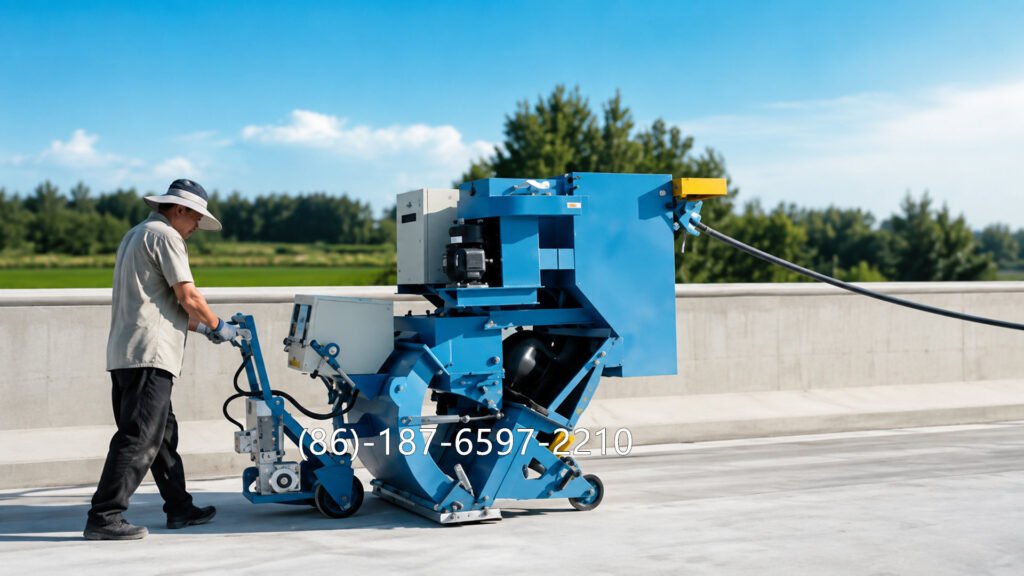
8. How to Choose the Right Compact Floor Shot Blasting Equipment
Before purchasing a compact floor shot blasting machine, evaluate the following factors.
1. Floor area and productivity target
Estimate the total area, available working hours, and required completion date. Ask the supplier for realistic productivity data under conditions similar to your project.
2. Coating type and thickness
Identify whether the floor has thin paint, epoxy, polyurethane, multiple coating layers, or a thick industrial topping. Request a test or removal recommendation for difficult coatings.
3. Required surface profile
Determine the target concrete surface profile specified by the new coating or repair system. A rougher surface is not automatically better; excessive profiling may damage the substrate or conflict with the coating specification.
4. Working width and access
Choose a machine width suitable for the available floor space, access routes, doorways, and working area. A compact design can improve access but may require more passes over large areas.
5. Dust collection and operator safety
Confirm the dust collector’s compatibility, airflow requirements, filtration arrangement, and safe disposal procedures. Where existing coatings may contain hazardous substances, arrange an appropriate assessment before work begins.
6. Maintenance and spare parts
Ask about blast-wheel wear parts, liners, abrasive separators, recovery seals, filters, and spare-part availability. A low purchase price may not represent the lowest total cost of ownership.
7. After-sales and customization
For overseas buyers, verify electrical compatibility, documentation, operator training, commissioning support, and delivery of replacement parts.
9. Common Problems and Practical Solutions
| Common Problem | Potential Cause | Recommended Action |
|---|---|---|
| Uneven surface profile | Inconsistent travel speed or overlapping passes | Standardize operating speed and verify the test section |
| Coating remains on the floor | Coating too thick or unsuitable for direct blasting | Test another removal sequence or use preliminary mechanical removal |
| Excessive abrasive consumption | Incorrect abrasive specification, wear, or leakage | Check media condition, seals, and recovery performance |
| Poor dust extraction | Blocked filters, leaks, or insufficient airflow | Inspect the collector, hoses, seals, and filter condition |
| Excessive substrate damage | Aggressive settings or weak concrete | Reduce aggressiveness and assess concrete strength |
| Slow production | Narrow working width, difficult coating, or repeated passes | Optimize machine selection and confirm realistic production capacity |
Correct machine selection and a controlled trial area can help identify these issues before full-scale renovation begins.
10. Why Work with a Professional Floor Shot Blasting Equipment Supplier?
For B2B buyers, equipment performance is only one part of a successful purchase. Technical support, reliable documentation, spare parts, and application guidance also matter.
When evaluating a manufacturer, consider:
- Application-based equipment selection: Recommendations based on your floor material, coating, and required profile.
- Verified technical specifications: Confirmed working width, power rating, dimensions, and operating requirements.
- Suitable dust collection: A compatible system designed for the intended application and local safety requirements.
- Customization options: Electrical configurations, machine width, accessories, and other available options.
- Export support: Packaging, technical documentation, spare parts, and shipment coordination.
- After-sales assistance: Troubleshooting, maintenance guidance, and replacement wear parts.
A supplier that understands the entire surface preparation process can help you select equipment that fits the job rather than simply selling a machine based on nominal power or working width.
11. Request a Quote for Compact Floor Shot Blasting Equipment
Planning a floor coating removal or industrial floor renovation project?
Get a machine recommendation based on your actual working conditions. Share your floor specifications with our sales team to identify a suitable compact floor shot blasting solution.
To help us prepare an accurate quotation, please provide:
- Floor material: Concrete, cementitious topping, or another substrate.
- Existing coating: Paint, epoxy, polyurethane, or another coating type.
- Coating thickness: Approximate thickness and number of layers.
- Total working area: Square meters or square feet.
- Required productivity: Target area per hour or per shift.
- Power supply: Voltage, frequency, and phase.
- Destination country: For electrical configuration and shipping arrangements.
Get Your Customized Equipment Proposal
Contact us to discuss your application, confirm available machine specifications, and request a quotation.
Send us your floor photos, coating details, and project requirements to receive a more accurate equipment recommendation.
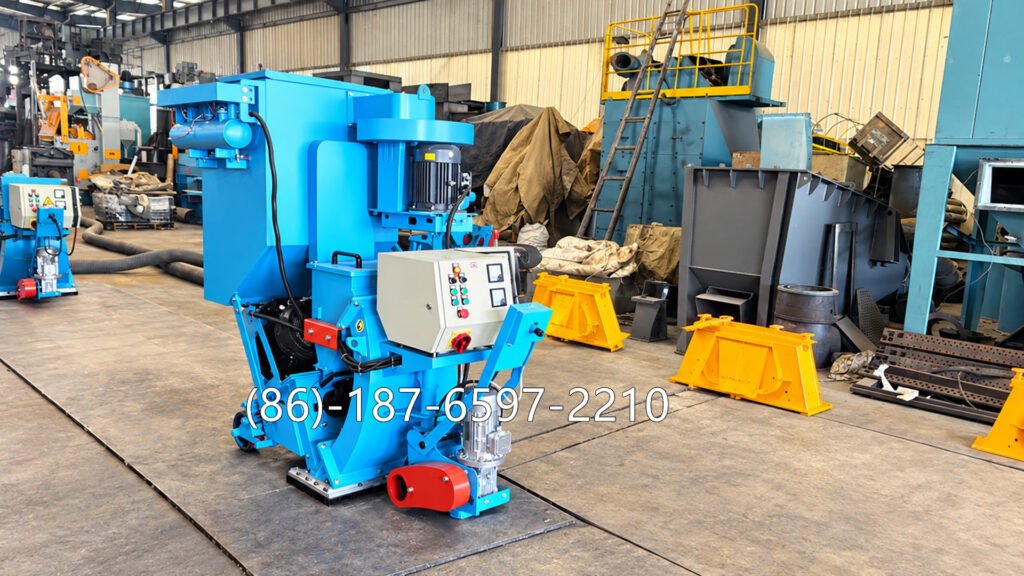
12. Frequently Asked Questions (FAQ)
Q1. Can compact floor shot blasting equipment remove old floor paint?
Yes, it can remove many compatible floor paints and coatings from concrete. Results depend on coating thickness, adhesion, material properties, and machine configuration. Very thick or flexible coatings may require preliminary removal.
Q2. Can a compact floor shot blasting machine remove epoxy coatings?
It can remove certain epoxy floor systems and prepare the underlying concrete. Thick, tough, or highly elastic epoxy coatings may require a different or combined removal process. Test the coating before selecting the final method.
Q3. What surface profile can floor shot blasting achieve?
The achievable profile depends on concrete hardness, abrasive selection, blast-wheel configuration, and operating speed. Shot blasting can produce a range of concrete surface profiles; select the target according to the coating manufacturer’s requirements and the applicable project specification.
Q4. Does a floor shot blasting machine need a dust collector?
Most enclosed floor shot blasting systems require a compatible dust collection system for effective dust management. The collector should be selected according to the machine’s airflow requirements and the hazards associated with the materials being removed.
Q5. How much floor area can a compact floor shot blasting machine process per hour?
Productivity varies with working width, floor condition, coating thickness, required surface profile, and operator speed. Request verified test data for your application instead of relying on a general production figure.
Q6. Is shot blasting suitable for every concrete floor?
No. The concrete must be sufficiently sound for the selected process. Weak, deteriorated, thin, or damaged substrates may require an alternative preparation method or repair before blasting.
Q7. What is the difference between floor shot blasting and floor grinding?
Shot blasting propels abrasive media against the surface to clean and profile concrete. Grinding uses abrasive tooling to remove material, smooth surfaces, or handle localized areas. The appropriate choice depends on the desired texture, coating, and site conditions.
Q8. How do I select the right compact floor shot blasting machine?
Consider the floor area, coating type and thickness, required surface profile, working width, available power supply, dust collection requirements, and service support. Providing these details to the supplier will help identify a suitable model.
Q9. Can the machine be customized for overseas markets?
Depending on the manufacturer’s available configurations, options may include electrical supply adaptations, working width, dust collection arrangements, accessories, and spare-parts packages. Confirm availability and compliance requirements before ordering.
Q10. What information should I provide to obtain a quotation?
Provide the substrate material, coating type and thickness, floor area, target productivity, required surface profile, destination country, and electrical specifications. Floor photos and a project drawing can further improve the accuracy of the recommendation.
Conclusion: Improve Floor Renovation Efficiency with the Right Equipment
Compact floor shot blasting equipment offers a practical mechanical solution for suitable paint removal, coating stripping, and concrete floor surface preparation. With the right machine configuration, abrasive recovery system, and dust collection arrangement, contractors can establish a more consistent preparation process before applying new flooring systems.
The key to a successful purchase is matching the equipment to the coating, substrate, required profile, and project productivity target.
Need a compact floor shot blasting machine for your next renovation project? Contact our team with your floor specifications and request a customized quotation today.