
Introduction: How Can You Remove Floor Paint More Efficiently?
Removing old paint and protective coatings from concrete floors is an important step before applying a new epoxy coating, polyurethane coating, floor hardener, or other surface treatment.
Traditional methods such as manual grinding and chemical stripping can be time-consuming. They may also produce inconsistent surface conditions, require additional cleanup, or leave contaminants that affect the next coating application.
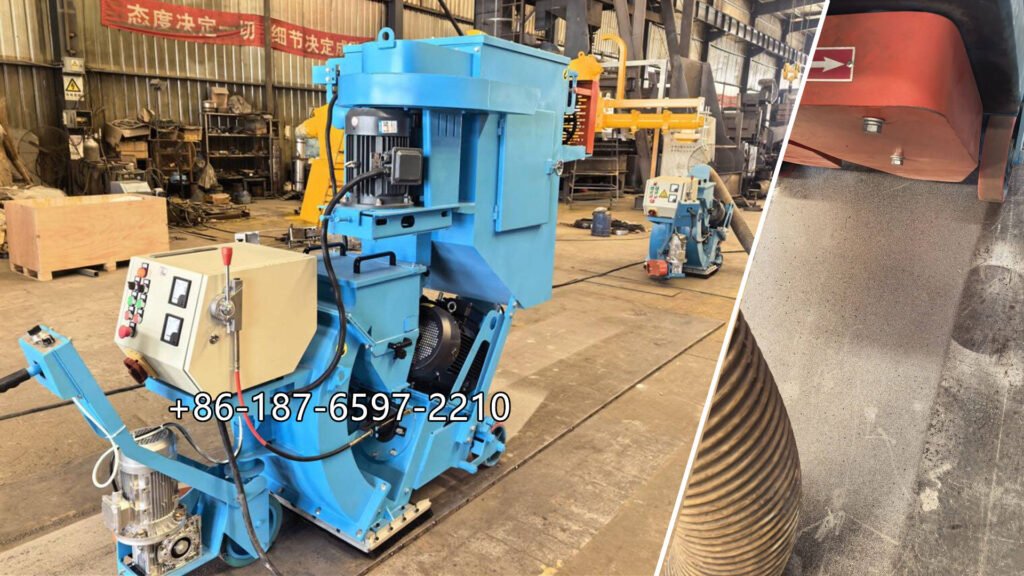
Compact floor shot blasting machine offers a mechanical solution for preparing horizontal concrete surfaces. It uses a high-speed centrifugal wheel to propel steel shot onto the floor. The impact removes suitable coatings and surface contaminants while creating a controlled surface profile for subsequent treatment.
Compared with manual preparation, a properly selected floor shot blaster can provide more consistent results over large horizontal areas. Its compact structure also makes it useful for workshops, factories, warehouses, parking facilities, and maintenance projects where access space is limited.
However, removing paint is only part of the job. The prepared floor must also meet the cleanliness, surface profile, and substrate condition required by the new coating system.
This guide explains how a compact floor shot blasting machine works, which parameters affect paint removal efficiency, what standards should be considered, and how to select the right equipment for your project.
1. What Is a Compact Floor Shot Blasting Machine?
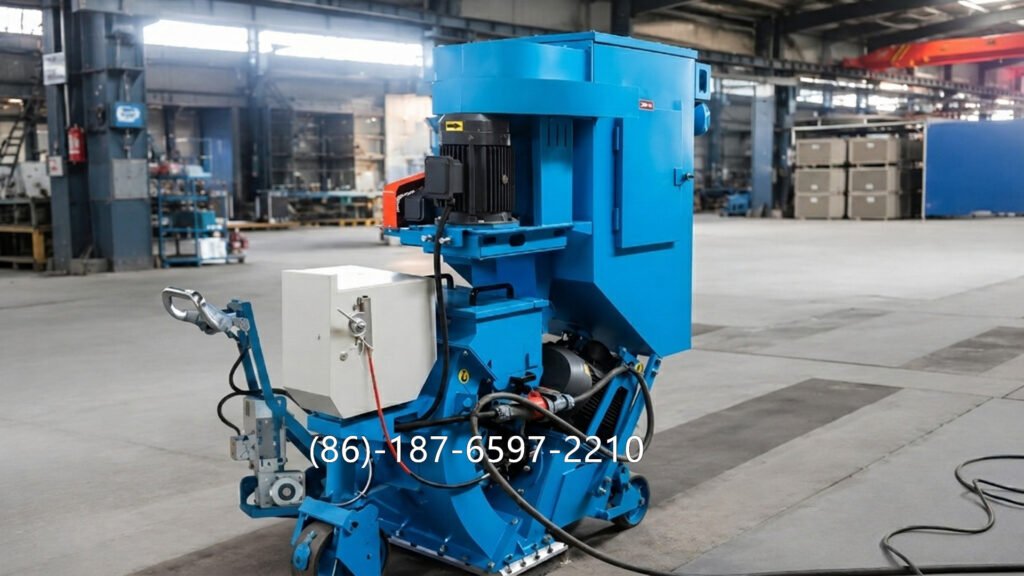
Compact floor shot blasting machine is a mechanical surface preparation unit designed to clean and profile horizontal surfaces using recyclable steel abrasive.
The main components typically include:
- Centrifugal blasting wheel
- Abrasive feed and control mechanism
- Blast chamber and wear-resistant liners
- Abrasive recovery and separation system
- Dust collection system
- Travel wheels and operating handle
- Electrical control system and drive mechanism
During operation, steel shot is accelerated by the blasting wheel and projected onto the concrete floor. The abrasive impacts the surface, removing suitable coatings and weak surface materials.
The machine then collects the used abrasive and removed debris. Reusable steel shot returns to the blasting system, while dust and unwanted particles are directed into the collection system.
This closed-circuit arrangement helps reduce loose abrasive on the floor and supports efficient material recovery.
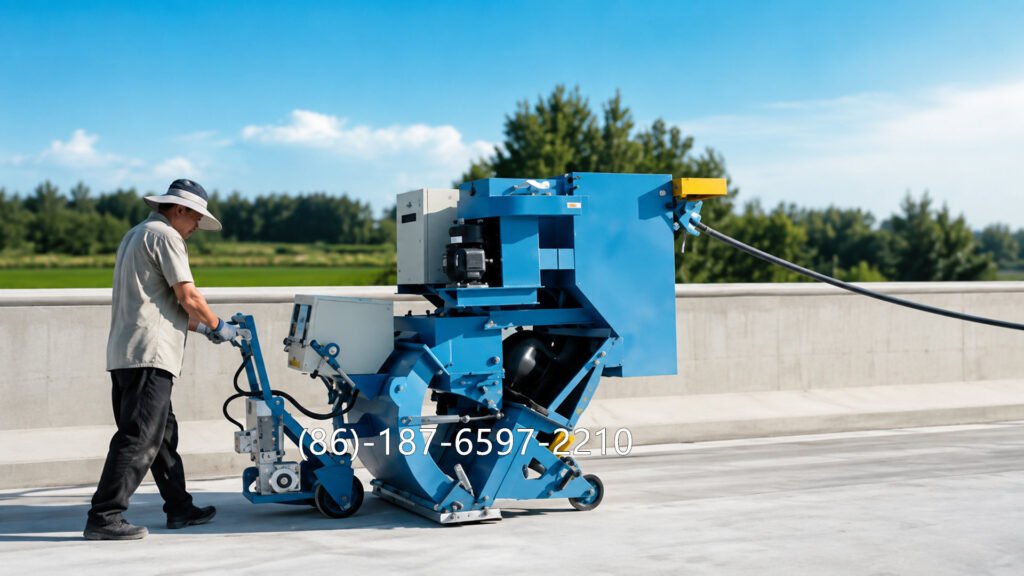
A compact design is particularly useful when equipment must be moved between work areas, transported to different job sites, or operated in facilities where a large industrial machine is difficult to position.
Important: A compact floor shot blaster is primarily designed for horizontal surface preparation. It is not a universal paint stripper for every coating, substrate, or floor geometry.
2. How Does a Compact Floor Shot Blasting Machine Improve Paint Removal Efficiency?
2.1 Removes Suitable Existing Coatings Mechanically
Steel shot impacts the coating and concrete surface at high velocity. This impact breaks down or removes suitable coatings, weak surface layers, and certain contaminants.
The actual removal performance depends on:
- Coating type and thickness
- Coating adhesion to the substrate
- Concrete strength and surface condition
- Steel shot size and condition
- Blasting wheel power and abrasive flow
- Machine travel speed
- Number of passes
Thin, brittle, or firmly bonded coatings may respond differently from thick, flexible, rubber-like, or uncured materials.
For suitable floor coatings, shot blasting can reduce the need for extensive manual scraping and grinding. Very thick or resilient coatings may require a different removal method or preliminary mechanical treatment.
Before starting a large project, conduct a test area to determine whether the selected machine and abrasive can achieve the required removal rate without damaging the substrate.
2.2 Creates a Surface Profile for the Next Coating
Removing visible paint does not automatically mean the concrete is ready for recoating.
The new coating may require a specific surface texture to achieve the intended mechanical bond. Shot blasting creates a profile by impacting the concrete with steel abrasive.
The resulting profile depends on the abrasive size, wheel settings, machine travel speed, number of passes, and concrete properties.
For example, a light preparation process may be suitable for some coating systems, while thicker coatings or repair materials may require a more pronounced profile.
The correct profile must come from the coating manufacturer’s instructions and the project specification. Excessive blasting can remove too much concrete or create an unnecessarily rough surface.
2.3 Improves Production Efficiency on Large Floor Areas
A compact floor shot blasting machine can process continuous horizontal surfaces without requiring an operator to manually grind every section.
Its production efficiency depends on the effective working width, travel speed, surface condition, required removal depth, and time spent repositioning the equipment.
For factories and contractors, the main productivity benefits may include:
- More consistent surface preparation across repeated passes
- Reduced dependence on manual grinding
- Recyclable abrasive
- Integrated abrasive recovery
- More predictable preparation procedures
- Easier movement between work areas with a compact machine
Actual output should be measured on the target floor. Catalogue capacity alone cannot predict the time needed to remove a particular coating.
2.4 Reduces Loose Abrasive and Dust Escape
A properly sealed shot blasting system collects spent abrasive and removed material through its recovery and dust extraction arrangement.
The separator returns usable steel shot to the blasting process. The dust collector captures fine particles generated during operation.
This design can reduce loose abrasive and airborne dust compared with uncontrolled open blasting. However, it does not eliminate all dust or guarantee a dust-free worksite.
Filter condition, chamber seals, floor flatness, collection airflow, and the nature of the removed coating all affect dust control.
When removing old industrial coatings, identify any hazardous substances before work begins. Lead-containing paint and other hazardous residues may require special containment, testing, and disposal procedures.
2.5 Helps Reduce Preparation Cost per Square Meter
The cost of floor preparation is not determined by machine purchase price alone.
A practical cost calculation should include:
- Labor and operating time
- Electrical energy
- Steel shot consumption and replacement
- Wear parts and maintenance
- Dust collection and waste disposal
- Edge grinding and additional preparation
- Rework caused by inconsistent surface quality
A compact floor shot blasting machine can reduce total preparation cost when its working width, removal capability, and maintenance requirements match the project.
The best equipment is not necessarily the machine with the highest motor power. It is the machine that achieves the specified result at an acceptable total cost per square meter.
3. How Does a Compact Floor Shot Blasting Machine Work?
A typical floor blasting operation follows six steps.
Step 1: Inspect the existing floor.
Check the coating type, thickness, adhesion, concrete condition, cracks, joints, moisture condition, and potential hazardous contaminants.
Step 2: Select the abrasive and operating settings.
Choose suitable steel shot and initial machine settings based on the coating and required surface profile.
Step 3: Start the dust collection system.
Verify the dust collector, filters, seals, and abrasive recovery components before starting blasting.
Step 4: Move the machine across the floor.
The blasting wheel projects steel shot onto the surface. The operator guides the machine at a controlled travel speed to achieve uniform coverage.
Step 5: Recover and separate the abrasive.
Reusable shot returns to the blasting wheel, while removed material and dust are collected for disposal or further handling.
Step 6: Inspect the prepared surface.
Check coating removal, surface profile, cleanliness, and concrete condition. Complete edges and corners separately where the machine cannot reach.
If the surface does not meet the specified acceptance criteria, adjust the process and repeat a test section before continuing across the entire floor.
4. Typical Technical Parameters of a Compact Floor Shot Blasting Machine
The following values are preliminary selection references for compact industrial floor shot blasting equipment. They are not guaranteed specifications for a particular Bestech model. Confirm the actual machine configuration with the manufacturer before publication or purchase.
| Technical parameter | Preliminary reference |
|---|---|
| Machine type | Compact walk-behind floor shot blaster |
| Working width | Approximately 200–350 mm for selected compact configurations |
| Blasting wheel motor | Approximately 7.5–15 kW, depending on design |
| Abrasive | Recyclable steel shot of a suitable grade and size |
| Travel system | Manual push or powered travel, depending on model |
| Dust collection | Integrated or separately connected dust collector |
| Surface application | Concrete floor coating removal, cleaning, and profiling |
| Removal depth | Depends on coating, concrete condition, abrasive, and operating settings |
| Production capacity | Project-dependent; verify by a representative floor test |
| Power supply | Confirm voltage, frequency, phase, and installed power with the supplier |
These ranges are intended for preliminary comparison only. Compact floor blasters vary considerably in wheel design, working width, power, and dust collection arrangement.
Do not use a working-width figure alone to estimate daily production. A 350 mm machine may perform very differently on a thin, brittle coating than on a thick, strongly bonded epoxy system.
For accurate equipment selection, ask the supplier to confirm the working width, wheel motor power, total installed power, travel speed, abrasive circulation rate, dust collector airflow, and expected production rate for your actual coating.
5. Which Standards Apply to Concrete Floor Paint Removal?
The correct acceptance criteria depend on the substrate, coating system, project specification, and intended service conditions.
5.1 AMPP SSPC-SP 13/NACE No. 6:2024
The standard titled Surface Preparation of Concrete addresses mechanical and chemical preparation of concrete before applying bonded protective coatings or linings.
It covers the selection of preparation methods and the required condition of the prepared substrate. The standard also addresses evaluation criteria such as surface profile, cleanliness, surface tensile strength, residual contaminants, pH, and moisture.
For shot blasting, the required preparation class should be agreed upon by the project owner, specifier, coating supplier, and contractor.
Official reference: https://content.ampp.org/books/book/933/Surface-Preparation-of-Concrete
5.2 ICRI Concrete Surface Profile (CSP)
The International Concrete Repair Institute’s concrete surface profile guidance helps specify the texture required for concrete coatings, overlays, and repair materials.
CSP profiles range from relatively smooth surfaces to much rougher profiles. The correct target depends on the coating or overlay system.
Shot blasting can produce different profiles depending on abrasive size, machine setup, and travel speed. Do not assume that every compact floor shot blasting machine automatically achieves a specific CSP value.
Where profile is a contractual requirement, inspect the prepared surface using the method specified by the project documentation.
ICRI reference: https://www.icri.org/
5.3 ASTM D4259: Abrading Concrete
ASTM D4259 addresses abrasion of concrete to prepare it for coating or lining application. It is a relevant reference when evaluating mechanical abrasion as part of a concrete coating preparation procedure.
Use the applicable current edition and the coating manufacturer’s instructions to determine the correct procedure and acceptance criteria.
ASTM reference: https://www.astm.org/
5.4 How to Verify Surface Preparation Quality
Before starting the job, confirm the following:
- Existing paint and unsuitable surface materials have been removed to the specified extent.
- The concrete is sound and free of loose material.
- The surface profile matches the requirements of the new coating.
- Dust and other bond-inhibiting contaminants have been removed.
- Moisture and other substrate conditions meet the coating manufacturer’s limits.
- Any required adhesion or surface strength tests have passed.
Engineering note: A surface profile is not the same as a cleanliness grade. The final prepared surface must meet all applicable requirements, not merely look rough enough.
6. Compact Floor Shot Blasting Machine vs. Floor Grinding Machine
Both machines can be used for concrete floor preparation, but their working principles and typical results differ.
| Comparison | Compact floor shot blaster | Floor grinder |
|---|---|---|
| Working principle | Centrifugal steel shot impact | Abrasive grinding tools |
| Main application | Cleaning and profiling horizontal concrete surfaces | Grinding, smoothing, and localized surface correction |
| Abrasive recovery | Often uses a recirculating shot system | Usually collects grinding dust through a vacuum system |
| Surface texture | Impact-generated profile | Ground or abraded surface |
| Production suitability | Efficient for suitable continuous floor areas | Useful for smoothing, edges, and selected coating removal tasks |
| Edge and corner access | Usually requires separate edge treatment | Specialized edge grinders are available |
| Best selection factor | Required coating removal and surface profile | Required leveling, smoothing, and grinding result |
For large, relatively flat concrete floors, shot blasting can provide efficient surface preparation when the coating and substrate are suitable.
For uneven surfaces, localized repairs, or areas that need smoothing, grinding may be more appropriate. Some projects use both methods.
7. How to Choose the Right Compact Floor Shot Blasting Machine
7.1 Confirm the Required Working Width
Working width directly affects the amount of floor covered in each pass.
A narrower machine may be easier to maneuver in restricted areas. A wider machine may be more productive across large, unobstructed floors.
Select the width based on access conditions, target output, and the ability to maintain consistent overlap between passes.
7.2 Identify the Paint or Coating Type
Different coatings require different preparation approaches.
Thin, brittle coatings may be suitable for direct shot blasting. Thick, flexible, uncured, or strongly bonded coatings may require preliminary removal or a different machine.
Provide the coating name, approximate thickness, and current condition when requesting a quotation.
7.3 Check the Required Surface Profile
A coating supplier may specify a particular concrete surface profile or preparation method.
The machine must be capable of producing the required surface without excessive removal of the concrete substrate.
Where the requirement is uncertain, carry out a sample test and obtain approval before full-scale production.
7.4 Match the Dust Collector to the Machine
Dust extraction is essential for stable operation and worksite cleanliness.
Confirm that the collector is suitable for the machine’s airflow requirement and the type of dust generated. Check filter cleaning, waste collection, sealing, and maintenance access.
If the old coating may contain hazardous substances, obtain a suitable hazard assessment before selecting the containment and collection arrangement.
7.5 Calculate the Real Production Rate
For preliminary planning, theoretical area coverage can be estimated as:
Theoretical area coverage = Working width × Travel speed
For example, a 350 mm working width moving at 5 m/min gives a theoretical coverage of 1.75 m²/min, or 105 m²/h.
This is a mathematical illustration, not a guaranteed machine output. Actual production will be lower when accounting for turns, overlap, loading and setup, coating removal difficulty, maintenance, and inspection.
Use a representative site trial to establish a realistic production rate.
7.6 Confirm Power and Site Requirements
Before purchasing, confirm:
- Available voltage, frequency, and phase
- Installed electrical power
- Dust collector location and connection
- Floor access, slope, and clearance
- Transportation and lifting requirements
- Consumables and spare parts availability
For contractors working at multiple sites, machine dimensions, transport weight, and ease of moving the equipment may be as important as motor power.
8. Common Problems and Troubleshooting
| Problem | Possible cause | Recommended action |
|---|---|---|
| Paint remains after blasting | Coating is too thick or resilient, or travel speed is too high | Conduct a test section and adjust the process or select a suitable preliminary removal method |
| Uneven surface profile | Inconsistent travel speed, overlapping passes, or unsuitable abrasive | Standardize travel speed and overlap; check abrasive condition |
| Excessive concrete removal | Abrasive impact is too aggressive or travel speed is too low | Reduce removal intensity and verify the profile on a test area |
| Steel shot consumption is high | Shot leakage, worn seals, or poor separator performance | Inspect seals, recovery components, and abrasive separation |
| Dust escapes from the machine | Damaged seals, blocked filters, or insufficient extraction | Check chamber sealing, ducting, filter condition, and collector operation |
| Machine output is too low | Difficult coating, excessive travel speed, or unsuitable working width | Reassess the coating condition, machine setup, and required removal depth |
| Shot blasting leaves visible stripes | Inconsistent travel or incorrect overlap | Maintain straight, parallel passes and verify the operating procedure |
| Surface appears clean but coating adhesion is poor | Dust, moisture, contamination, unsuitable profile, or weak concrete | Check substrate condition and perform the specified quality tests |
Always disconnect and isolate the machine before maintenance. Follow the manufacturer’s lockout procedure, and never open the blasting chamber while the wheel is operating.
9. Maintenance Tips for Stable Performance
Routine maintenance helps maintain abrasive efficiency, reduce downtime, and protect the machine from excessive wear.
Blasting wheel: Inspect the blades, impeller, control cage, and other wear parts according to the manufacturer’s schedule.
Abrasive recovery: Check the shot supply, separator, return path, and collection system. Remove unsuitable debris and replace worn or contaminated abrasive as required.
Dust collector: Monitor filter condition, differential pressure where available, duct connections, and dust discharge.
Sealing system: Inspect the blast chamber seals and recovery connections to reduce shot leakage and dust escape.
Electrical system: Check cables, controls, switches, and safety devices according to the operating manual.
Machine travel: Inspect wheels, bearings, drive components, and adjustment mechanisms where fitted.
Keep records of operating hours, abrasive replacement, wear-part changes, and maintenance downtime. These records help identify the actual cost per square meter and establish practical service intervals.
10. Why Choose a Customized Compact Floor Shot Blasting Machine?
Different projects have different requirements. A contractor preparing warehouse floors may need a portable machine with a suitable working width, while a factory may need a configuration that integrates with its maintenance schedule and dust collection arrangements.
Possible configuration options include:
- Different working widths
- Different blasting wheel motor powers
- Integrated or separate dust collectors
- Manual or powered travel systems
- Customized electrical specifications
- Wear-resistant chamber components
- Spare parts and maintenance support
For export orders, confirm the power supply, machine dimensions, dust collection configuration, applicable safety requirements, and consumable availability before manufacturing.
The purpose of customization is to match the machine to the actual floor preparation job—not simply to increase motor power or working width.
11. Frequently Asked Questions
Q1: Can a compact floor shot blasting machine remove epoxy paint?
It can remove certain epoxy coatings, depending on coating thickness, adhesion, brittleness, and concrete condition. Thick or highly resilient coatings may require multiple passes or preliminary mechanical removal. A test area is recommended before full production.
Q2: Can the machine remove paint without damaging concrete?
The process can be adjusted to limit concrete removal, but the result depends on substrate strength, abrasive size, wheel settings, and travel speed. Test the selected settings on a representative area before starting the complete job.
Q3: What is the difference between shot blasting and sand blasting for floor preparation?
Shot blasting generally uses a centrifugal wheel to propel recyclable steel shot onto the floor. Conventional abrasive blasting often uses compressed air to project abrasive through a nozzle. The equipment, abrasive recovery, surface profile, and dust management requirements differ.
Q4: Does a compact floor shot blaster require a separate dust collector?
That depends on the machine design. Some models use an integrated collection system, while others require a separate dust collector. Confirm the required airflow, connection size, filter arrangement, and waste handling method with the supplier.
Q5: How much floor area can a compact machine prepare per hour?
Production depends on working width, travel speed, coating thickness, substrate condition, required profile, and operator technique. Calculate theoretical coverage for initial planning, then confirm actual output through a representative test.
Q6: Can the machine prepare floors before epoxy coating?
Yes, it can be suitable for preparing concrete before epoxy coating when the specified profile, cleanliness, and substrate conditions can be achieved. Follow the epoxy manufacturer’s preparation requirements and verify the finished surface before application.
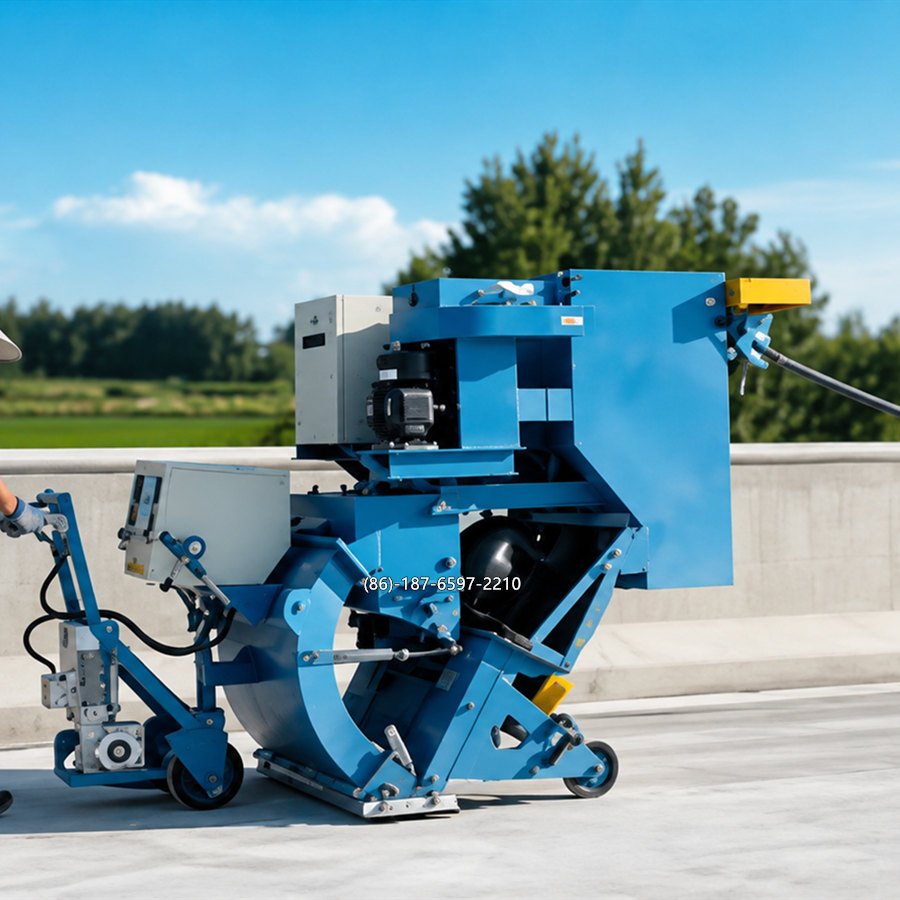
Q7: Is a compact floor shot blasting machine suitable for outdoor projects?
It can be used outdoors when the machine, power supply, dust collection system, and site conditions are suitable. The concrete should meet the operating requirements, and environmental conditions must be considered before coating application.
Q8: What information is needed for a quotation?
Provide the floor area, coating type and thickness, substrate condition, required surface profile, target production rate, available power supply, and dust collection requirements. Photos or a short video of the existing floor can help the supplier assess the application.
12. Request a Compact Floor Shot Blasting Machine Quotation
If your project requires efficient removal of suitable floor paint, old coatings, or surface contaminants, the correct compact floor shot blasting machine can help improve preparation consistency and reduce unnecessary manual work.
Bestech can evaluate your application based on the required working width, blasting wheel configuration, abrasive recovery system, and dust collection arrangement.
To recommend a suitable machine, please provide the following information:
- Floor material: Concrete, cementitious flooring, or another substrate.
- Floor area: Total area in square meters.
- Existing coating: Epoxy, polyurethane, paint, sealer, or another material.
- Coating thickness: Approximate thickness in millimeters.
- Surface preparation target: Coating removal, cleaning, or a specified concrete surface profile.
- Production requirement: Target square meters per hour or per shift.
- Site conditions: Available voltage, frequency, phase, and dust collection requirements.
Send your floor photos, coating details, or project drawings to help us assess the application.
Request a Technical Proposal from Bestech
Receive a machine recommendation, preliminary technical specifications, and a configuration matched to your floor preparation requirements.