
Buying a mesh belt shot blasting machine sounds simple.
You find several suppliers.
You compare:
- Belt width
- Number of blast wheels
- Motor power
- Machine price
Then you choose the cheapest one with the biggest numbers.
That is exactly how many factories end up with the wrong machine.
Because the real question is not:
Which mesh belt shot blasting machine is the biggest?
The real question is:
Which machine can process my actual workpieces at the required production capacity and achieve the required surface condition at an acceptable operating cost?
A machine with a 1500 mm belt may be unnecessary if your workpieces are only 300 mm wide.
A machine with six blast wheels may consume more energy than needed.
A cheaper machine may become expensive if the belt wears quickly, abrasive recovery is inefficient, or production capacity cannot meet your target.
The correct machine selection starts with the workpiece.
Not the catalog.
This guide explains the 7 key factors B2B buyers should evaluate before purchasing a Mesh Belt Shot Blasting Machine.
What Is a Mesh Belt Shot Blasting Machine?
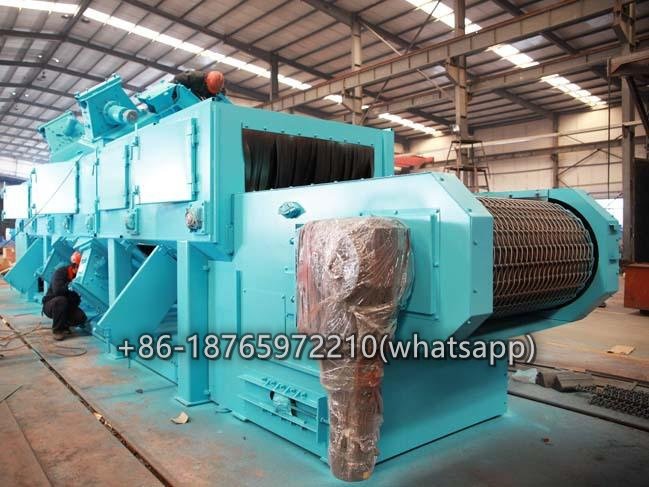
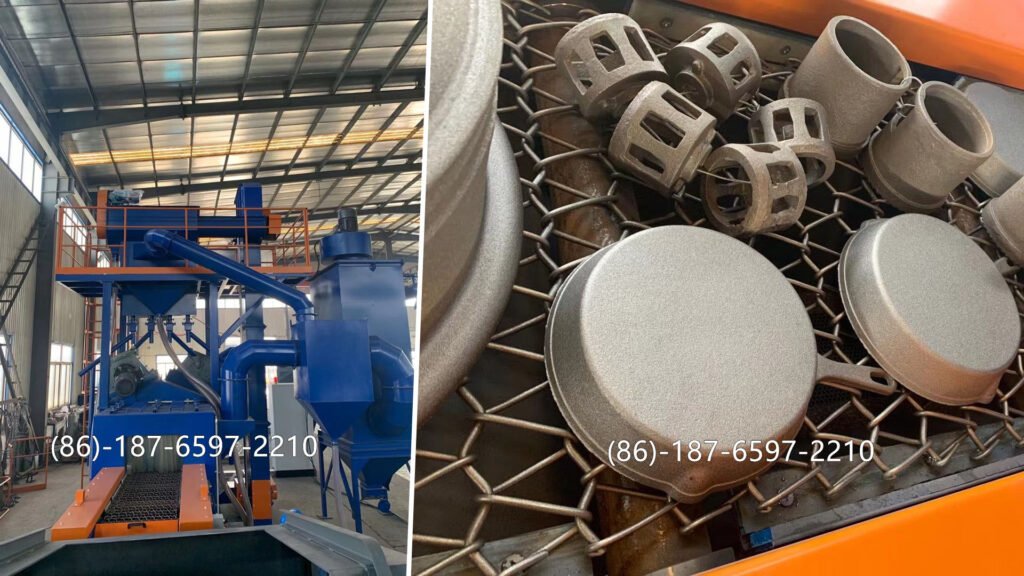
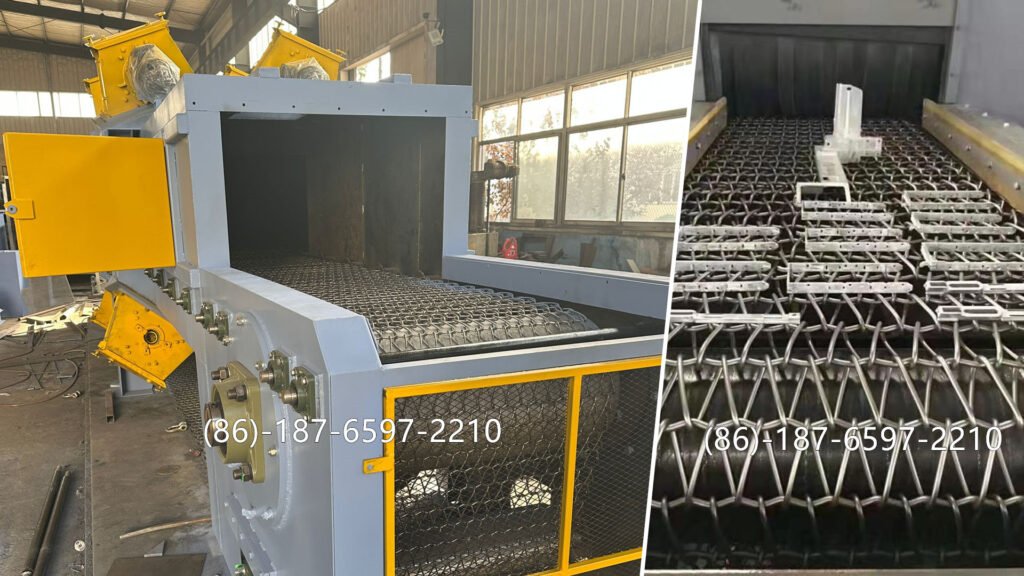
Mesh belt shot blasting machine is a continuous surface treatment system designed to clean and prepare metal parts while transporting them through a blasting chamber on a wire mesh conveyor.
The process usually follows this sequence:
Workpiece Loading
        ↓
Wire Mesh Belt Conveyor
        ↓
Shot Blasting Chamber
        ↓
Abrasive Impact
        ↓
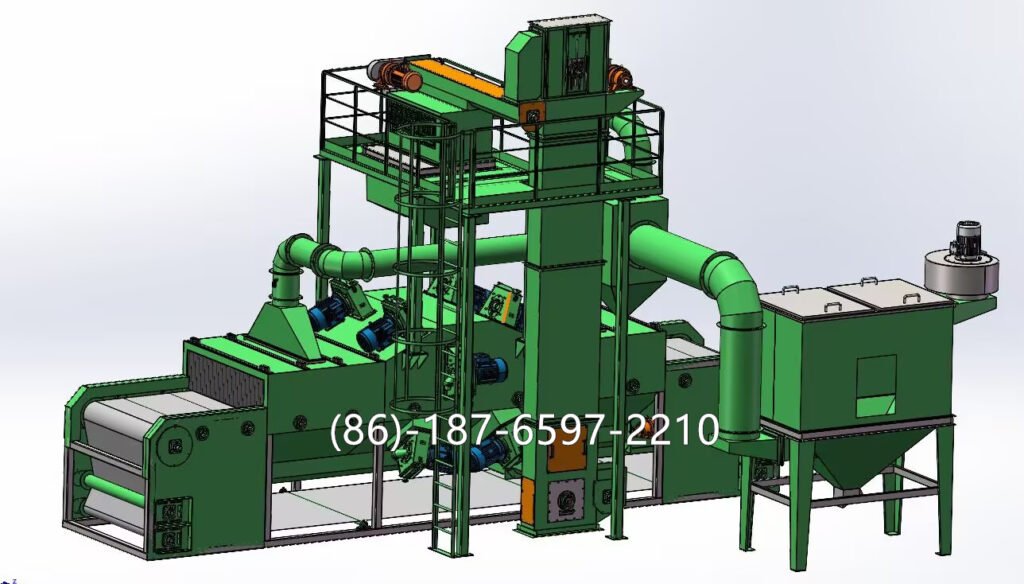
Abrasive Collection
        ↓
Abrasive Recovery
        ↓
Abrasive Separation
        ↓
Dust Collection
        ↓
Clean Workpiece Discharge
It is commonly used for:
- Steel castings
- Iron castings
- Aluminum castings
- Forgings
- Heat-treated parts
- Automotive components
- Hardware
- Welded components
- General industrial metal parts
The main advantage is continuous production.
Instead of:
Load → Blast → Stop → Unload → Reload
the process becomes:
Continuous Loading → Continuous Blasting → Continuous Discharge
But continuous production only works well when the machine is matched correctly to the workpiece and production target.
The 7 Key Factors for Choosing the Right Mesh Belt Shot Blasting Machine
Factor 1: Start with Your Workpiece — Size, Weight and Shape
This is the first and most important factor.
Before discussing machine price, send the manufacturer the following information:
Maximum Workpiece Dimensions
- Length: ___ mm
- Width: ___ mm
- Height: ___ mm
Maximum Single-Part Weight
- ___ kg
Average Part Weight
- ___ kg
Workpiece Material
- Carbon steel
- Stainless steel
- Cast iron
- Aluminum
- Other alloy
Workpiece Geometry
Ask yourself:
- Will the part remain stable on the mesh belt?
- Can it roll?
- Can it slide?
- Will parts overlap?
- Can small parts fall through the mesh?
- Can the workpiece be damaged by direct abrasive impact?
These questions directly affect the conveyor and blasting chamber design.
Practical Example
A small flat casting and a heavy irregular forging may both fit on a 1000 mm mesh belt.
But they do not require the same machine configuration.
The forging may require:
- Higher belt load capacity
- Different mesh design
- Stronger conveyor drive
- Different blast wheel arrangement
- Lower conveyor speed
The lesson is simple:
Machine size should be based on the workpiece, not just the available floor space.
Factor 2: Determine the Real Production Capacity
The second major factor is production capacity.
Do not simply tell the supplier:
“We need a high-capacity machine.”
That is not enough information.
Define capacity in a measurable unit.
For example:
- 500 kg/hour
- 2 tons/hour
- 1,000 pieces/hour
- 5,000 pieces per shift
- 300 m²/hour
The correct unit depends on your production process.
A simple engineering logic looks like this:
Required Output
       ↓
Workpiece Size
       ↓
Part Arrangement
       ↓
Loading Density
       ↓
Required Blasting Time
       ↓
Conveyor Speed
       ↓
Blast Wheel Configuration
Why Conveyor Speed Matters
The faster the belt moves:
Higher Production Capacity
but also:
Shorter Abrasive Exposure Time
The slower the belt moves:
Longer Blasting Exposure
but:
Lower Production Capacity
The goal is not to operate the belt at the highest speed.
The goal is to find:
The highest practical conveyor speed that still achieves the required surface result.
Factor 3: Choose the Correct Mesh Belt Width and Load Capacity
Many buyers focus only on belt width.
But belt width is only one parameter.
You should also consider:
- Effective belt width
- Mesh opening size
- Belt material
- Maximum continuous load
- Workpiece weight
- Loading density
- Belt operating temperature
- Belt wear resistance
- Conveyor drive system
Typical Reference Range
| Parameter | Typical Range |
|---|---|
| Effective Belt Width | Approx. 600–2000 mm |
| Conveyor Speed | Approx. 0.5–5 m/min |
| Working Height | Approx. 200–800 mm |
| Production Mode | Continuous |
| Conveyor Control | Variable Frequency Drive |
| Belt Design | Customized by Workpiece |
These values are typical references only.
The final design should be based on the actual workpiece and loading requirement.
A Common Buying Mistake
Some buyers choose a wider belt because:
“A bigger machine must have higher capacity.”
Not always.
If the blast wheel arrangement does not cover the full workpiece area effectively, a wider belt does not automatically create higher useful output.
The machine needs:
Correct Belt Width + Correct Blast Coverage + Correct Conveyor Speed
Factor 4: Evaluate Blast Wheel Quantity, Power and Coverage
This is where many quotations become misleading.
One supplier offers:
4 blast wheels
Another offers:
6 blast wheels
A buyer may assume:
“Six wheels must be better.”
Not necessarily.
The important question is:
Where are the blast wheels located, and how does the abrasive pattern cover the workpiece?
The blast wheel configuration should consider:
- Workpiece width
- Workpiece height
- Workpiece shape
- Surface areas requiring cleaning
- Required throughput
- Initial surface condition
A typical machine may use:
| Parameter | Typical Range |
|---|---|
| Blast Wheels | Approx. 2–8 Units |
| Wheel Power | Approx. 7.5–22 kW per Wheel |
| Abrasive Type | Steel Shot / Steel Grit |
| Abrasive Flow | Approx. 100–250 kg/min per Wheel |
Again, these are reference ranges.
The correct configuration depends on the application.
The Better Selection Formula
Do not compare only:
Number of Blast Wheels
Compare:
Blast Wheel Design
Abrasive Flow
Wheel Arrangement
Abrasive Coverage
Conveyor Speed
Required Surface Result
That gives a more realistic comparison.
Factor 5: Define Your Required Surface Preparation Standard
“Clean surface” is not a technical requirement.
If the workpiece will be painted or coated, you may need a defined surface preparation grade.
A commonly referenced standard is ISO 8501-1, which provides visual preparation grades for steel surfaces.
Blast-cleaned grades commonly include:
- Sa 2
- Sa 2½
- Sa 3
However, an important engineering point must be understood:
A shot blasting machine is not automatically a “Sa 2½ machine.”
The final surface condition depends on:
- Initial surface condition
- Abrasive type
- Abrasive size
- Abrasive flow
- Blasting intensity
- Conveyor speed
- Exposure time
- Workpiece geometry
The machine provides the process capability.
The operating parameters determine the actual result.
Factor 6: Check Abrasive Recovery and Separation Efficiency
Abrasive is continuously circulated through the machine.
The basic process looks like this:
Blast Wheel
     ↓
Used Abrasive
     ↓
Collection Hopper
     ↓
Screw Conveyor
     ↓
Bucket Elevator
     ↓
Abrasive Separator
     ↓
Reusable Abrasive
     ↓
Storage Hopper
     ↓
Blast Wheel
A good recovery system should continuously transport used abrasive back to the separator.
The separator removes unwanted material such as:
- Dust
- Broken abrasive
- Excessive fines
- Sand
- Surface contaminants
The usable abrasive returns to the blasting cycle.
Why This Matters
Poor abrasive separation can lead to:
- Reduced cleaning efficiency
- Unstable blasting results
- Increased abrasive consumption
- Higher wear
- More dust
The ISO 11124 series is commonly referenced for specifications and classification of metallic blast-cleaning abrasives.
Buyer Question to Ask
Do not simply ask:
“Does the machine have abrasive recycling?”
Ask:
What type of separator is used, and how is the abrasive circulation system designed?
That question gives you more useful engineering information.
Factor 7: Consider Dust Collection, Automation and Future Expansion
A shot blasting machine is not only:
Blast Wheels + Conveyor
It is a complete system.
The dust collection system should be selected according to:
- Machine size
- Number of blast wheels
- Abrasive flow
- Production environment
- Local environmental requirements
Common options include:
- Pulse jet bag filters
- Cartridge dust collectors
The correct configuration depends on the application.
Automation Options
Depending on production requirements, the machine may include:
- Automatic loading
- Automatic unloading
- Variable conveyor speed
- PLC control
- HMI operation
- Workpiece sensors
- Fault alarms
- Production monitoring
- Remote diagnostics where supported
When comparing machines, think beyond today’s production capacity.
Ask:
Can this system support future production expansion?
A slightly higher initial investment may be more economical if the machine can remain useful when production volume increases.
Surface Profile: The Parameter Many Buyers Forget
Surface cleanliness is not the same as surface profile.
For coating applications, the surface roughness profile may also be important.
The ISO 8503 series covers surface roughness characteristics of blast-cleaned steel substrates.
Relevant parts include:
ISO 8503-2
Comparator methods for assessing surface profile.
ISO 8503-5
Replica tape methods for determining surface profile.
Surface profile is influenced by:
- Abrasive shape
- Abrasive size
- Abrasive hardness
- Blasting velocity
- Base material
A coating specification may require a specific profile range.
For example:
25–60 μm
or:
40–75 μm
These are examples only.
The final target should always follow the coating specification or project requirement.
Typical Technical Parameters of a Mesh Belt Shot Blasting Machine
| Parameter | Typical Configuration |
|---|---|
| Machine Type | Mesh Belt / Wire Mesh Belt Shot Blasting Machine |
| Production Mode | Continuous |
| Application | Castings / Forgings / Metal Parts |
| Effective Belt Width | Approx. 600–2000 mm |
| Effective Working Height | Approx. 200–800 mm |
| Conveyor Speed | Approx. 0.5–5 m/min |
| Blast Wheel Quantity | Approx. 2–8 Units |
| Blast Wheel Power | Approx. 7.5–22 kW per Wheel |
| Abrasive | Steel Shot / Steel Grit |
| Abrasive Flow | Approx. 100–250 kg/min per Wheel |
| Abrasive Recovery | Automatic |
| Abrasive Separator | Air-Wash Separator |
| Dust Collector | Bag Filter / Cartridge Filter |
| Speed Control | Variable Frequency Drive |
| Control System | PLC + HMI Optional |
| Production Capacity | Customized |
Engineering Note: These parameters are typical reference ranges. Actual specifications should be calculated according to workpiece dimensions, weight, production target and required surface treatment result.
Mesh Belt Shot Blasting Machine vs. Tumble Belt Machine
Before purchasing, confirm whether a continuous mesh belt system is really the best option.
| Factor | Mesh Belt Shot Blasting | Tumble Belt Shot Blasting |
|---|---|---|
| Production Mode | Continuous | Batch |
| Material Handling | Conveyor | Tumble |
| Automation Integration | High | Moderate |
| Production Rhythm | Continuous | Stop-and-Start |
| Part-to-Part Impact | Lower Potential | Higher Potential |
| Bulk Small Parts | Suitable | Excellent |
| Delicate Components | Often Better | Depends on Part |
| High-Volume Continuous Production | Excellent | Limited by Batch Cycle |
Choose a Mesh Belt Machine When:
- Your production is continuous
- You want easier line integration
- Parts should not tumble heavily
- You require stable conveyor movement
- You process medium-to-high production volumes
Choose a Tumble Belt Machine When:
- Parts are processed in batches
- Parts can safely tumble together
- You handle loose bulk components
- Continuous material flow is not required
The machine should match the production method.
Not the other way around.
Mesh Belt Shot Blasting Machine vs. Roller Conveyor Machine
These two machine types are also designed for different workpieces.
Mesh Belt Shot Blasting Machine
Commonly suitable for:
- Small castings
- Medium castings
- Forgings
- Automotive components
- Hardware
- Complex parts
Roller Conveyor Shot Blasting Machine
Commonly suitable for:
- Steel plates
- Steel pipes
- H-beams
- I-beams
- Structural profiles
- Large fabricated steel components
The key difference is workpiece handling.
If your workpiece is a large structural steel plate, a mesh belt is probably not the right solution.
If you are processing thousands of smaller castings, a roller conveyor may be unnecessary.
Common Mistakes When Choosing a Mesh Belt Shot Blasting Machine
Mistake 1: Choosing by Price Only
The lowest purchase price may not produce the lowest operating cost.
Consider:
- Energy consumption
- Abrasive consumption
- Wear parts
- Maintenance
- Production capacity
- Labor requirement
- Downtime
A better comparison is:
Total Cost per Part Processed
or:
Total Cost per Ton Processed
Mistake 2: Ignoring Workpiece Loading
Capacity depends on how efficiently workpieces are arranged on the conveyor.
If parts overlap, the hidden surfaces may not receive sufficient blasting.
The workpiece arrangement should be considered during machine selection.
Mistake 3: Choosing More Blast Wheels Without Checking Coverage
More wheels increase installed power.
But poor wheel positioning may still create dead zones.
Ask for:
- Blast wheel arrangement
- Blasting direction
- Coverage explanation
- Recommended operating speed
Mistake 4: Ignoring the Abrasive System
The abrasive recovery system directly affects long-term operating cost.
Check:
- Recovery conveyor
- Bucket elevator
- Separator
- Storage hopper
- Abrasive control
Mistake 5: Ignoring Future Production Growth
If your production is expected to double within two years, buying a machine designed exactly for today’s minimum requirement may create another investment problem later.
Consider a reasonable capacity margin.
But do not oversize the machine unnecessarily.
The goal is:
Enough capacity for stable production plus reasonable future growth.
How to Compare Two Supplier Quotations
Do not compare quotations only by total price.
Create a comparison table.
| Item | Supplier A | Supplier B |
|---|---|---|
| Effective Belt Width | ||
| Effective Blasting Height | ||
| Belt Load Capacity | ||
| Conveyor Speed Range | ||
| Blast Wheel Quantity | ||
| Blast Wheel Power | ||
| Abrasive Flow | ||
| Abrasive Separator | ||
| Dust Collector | ||
| Control System | ||
| Automation Level | ||
| Wear Liners | ||
| Spare Parts | ||
| Factory Testing | ||
| Installation Support | ||
| Warranty | ||
| Delivery Time |
This makes technical differences easier to identify.
Two machines may look similar in photos but have very different configurations.
Factory Acceptance Test: What Should You Check?
For customized industrial equipment, factory testing is an important step.
A typical factory acceptance test may include:
- Conveyor operation
- Conveyor speed adjustment
- Blast wheel operation
- Abrasive circulation
- Abrasive separation
- Dust collector operation
- Electrical control
- Safety interlocks
- Sample workpiece testing
The ideal test process is:
Customer Workpiece
       ↓
Initial Inspection
       ↓
Abrasive Selection
       ↓
Machine Adjustment
       ↓
Trial Blasting
       ↓
Surface Inspection
       ↓
Parameter Confirmation
Whenever possible, testing with an actual production workpiece provides more useful information than testing with a random sample.
Maintenance Factors You Should Consider Before Buying
Shot blasting equipment operates under continuous abrasive wear.
Before purchasing, ask about maintenance access.
Blast Wheel Maintenance
Check accessibility for:
- Blades
- Impeller
- Control cage
- Distributor
Mesh Belt Maintenance
Check:
- Belt tensioning
- Alignment
- Sprockets
- Mesh replacement
Abrasive System
Inspect maintenance access to:
- Screw conveyor
- Bucket elevator
- Separator
Dust Collector
Confirm:
- Filter replacement method
- Cleaning system
- Dust discharge
Easy maintenance access can reduce downtime over the machine’s service life.
Mesh Belt Shot Blasting Machine Buying Checklist
Before confirming your order, check:
- Maximum workpiece dimensions
- Maximum single-part weight
- Average workpiece weight
- Production capacity
- Required surface preparation result
- Surface profile requirement
- Effective belt width
- Mesh belt load capacity
- Conveyor speed range
- Blast wheel quantity
- Blast wheel power
- Blast wheel arrangement
- Abrasive flow
- Abrasive recovery system
- Abrasive separator
- Dust collector
- PLC control
- Safety protection
- Wear-resistant liners
- Spare parts package
- Factory acceptance testing
- Installation support
- After-sales service
Frequently Asked Questions
What is the first thing to consider when choosing a mesh belt shot blasting machine?
The workpiece.
You should first provide the maximum dimensions, weight, material, shape and current surface condition.
How do I calculate the required machine capacity?
Start with your required output in:
- kg/hour
- tons/hour
- pieces/hour
- pieces per shift
Then calculate the required conveyor speed based on workpiece loading density and required blasting exposure time.
How many blast wheels do I need?
There is no universal answer.
The quantity depends on workpiece size, surface condition, production capacity, conveyor speed and required surface result.
Can a mesh belt shot blasting machine achieve Sa 2½?
For suitable steel workpieces, the blasting process can be configured to target a preparation grade such as Sa 2½. The actual result depends on the initial surface condition, abrasive, exposure time and operating parameters.
What abrasive should I use?
Steel shot and steel grit are commonly used for metallic surface preparation. The choice depends on the cleaning requirement and desired surface profile.
What production capacity can a mesh belt machine achieve?
Capacity is customized according to workpiece size, loading density, blast wheel configuration, conveyor speed and required cleaning result.
Can the machine be integrated into an automatic production line?
Yes. Mesh belt conveyor systems can be integrated with automatic loading, inspection, machining, painting or other downstream processes.
How much does a mesh belt shot blasting machine cost?
The final cost depends on:
- Machine dimensions
- Belt width
- Load capacity
- Blast wheel configuration
- Dust collector
- Automation level
- Customization requirements
For an accurate quotation, the supplier should receive complete workpiece and production information.
Recommended Factory Direct Customization Options
Depending on your production requirements, a mesh belt shot blasting machine can be customized with:
1. Customized Belt Width
Designed according to maximum workpiece dimensions and loading method.
2. Heavy-Duty Mesh Belt
Configured according to:
- Part weight
- Loading density
- Production volume
3. Variable Conveyor Speed
Allows adjustment of blasting exposure time.
4. Customized Blast Wheel Layout
Designed according to workpiece geometry and cleaning requirements.
5. Automatic Abrasive Recovery
Continuous abrasive collection, separation and reuse.
6. Industrial Dust Collection
Bag filter or cartridge filter configuration based on the application.
7. PLC Automation
Optional functions may include:
- Automatic operation
- Speed control
- Fault monitoring
- Safety interlocking
- Production monitoring